www.gsmgateway.in

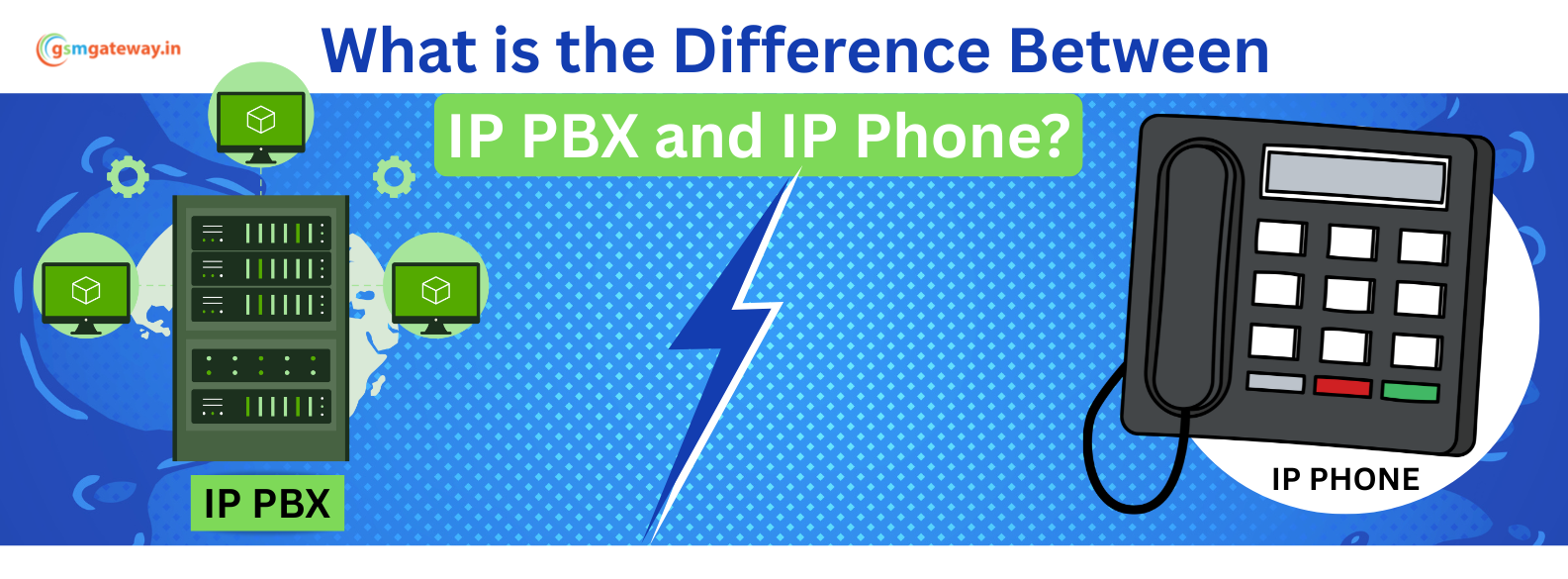
Many business owners and IT managers get confused about the difference between IP PBX
and IP phone systems when upgrading their communication setup. While both use internet
protocol technology, they serve completely different roles in your phone system.
This guide is designed for small to medium business owners, office managers, and IT
professionals who need to make informed decisions about their company's phone
infrastructure. We'll break down the technical jargon into simple terms so you can
understand what each system does and which one fits your needs.
We'll cover how IP PBX Technology works as your call management hub and what makes
IP phones different from traditional desk phones.
You'll also learn about the key technical differences that affect your daily operations and get a
clear cost breakdown to help you budget for implementation. By the end, you'll know exactly which
solution makes the most sense for your organization's size and communication requirements.
The system operates through Session Initiation Protocol (SIP), which establishes, manages, and terminates voice sessions. Your voice gets converted into data packets that travel through the same network carrying your emails and web traffic. The IP PBX server acts as the central hub, managing user registrations, call routing decisions, and feature implementations.
Call routing in IP PBX systems operates through intelligent decision trees that analyze
multiple factors before connecting calls. When someone dials your main number, the
system first checks time-based routing rules. During business hours, calls might go to
your receptionist, while after-hours calls route to voicemail or an answering
service.
Ring groups distribute incoming calls across multiple phones simultaneously or in
sequence. Sales teams can share a common number, with calls ringing all available
representatives at once. If nobody answers within a specified timeframe, the system
escalates to management or diverts to voicemail.
IP phones come in two main varieties that serve different workplace needs and preferences. Physical IP phones resemble traditional desk phones but connect directly to your network through Ethernet cables or Wi-Fi. These devices range from basic models with essential calling functions to executive-level phones featuring large touchscreens, multiple line appearances, and premium audio quality.
Modern IP phones pack sophisticated features that transform how
businesses handle
communications. Call forwarding, hold, transfer, and three-way conferencing represent
just the starting point of capabilities available today.
The beauty of IP phone features lies in their software-based nature. Regular firmware
updates continuously add new capabilities without requiring hardware replacements,
protecting your technology investment over time.
Small businesses typically need communication systems that balance functionality with
budget constraints. For companies with 5-20 employees, a basic IP PBX system paired with
standard IP phones offers the sweet spot.
These setups usually require minimal upfront investment while providing essential features like call routing, voicemail, and basic
conferencing capabilities.
Recommended Small Business Configuration:
IP PBX systems and IP phones serve different but complementary roles in modern business communications. An IP PBX acts as the central hub that manages your entire phone system, handling call routing, voicemail, and advanced features across your organization. IP phones, on the other hand, are the individual devices that connect to this system, offering enhanced functionality compared to traditional desk phones. Understanding this relationship helps you see that you're not choosing between one or the other – you're deciding how to build a complete communication solution.