www.gsmgateway.in

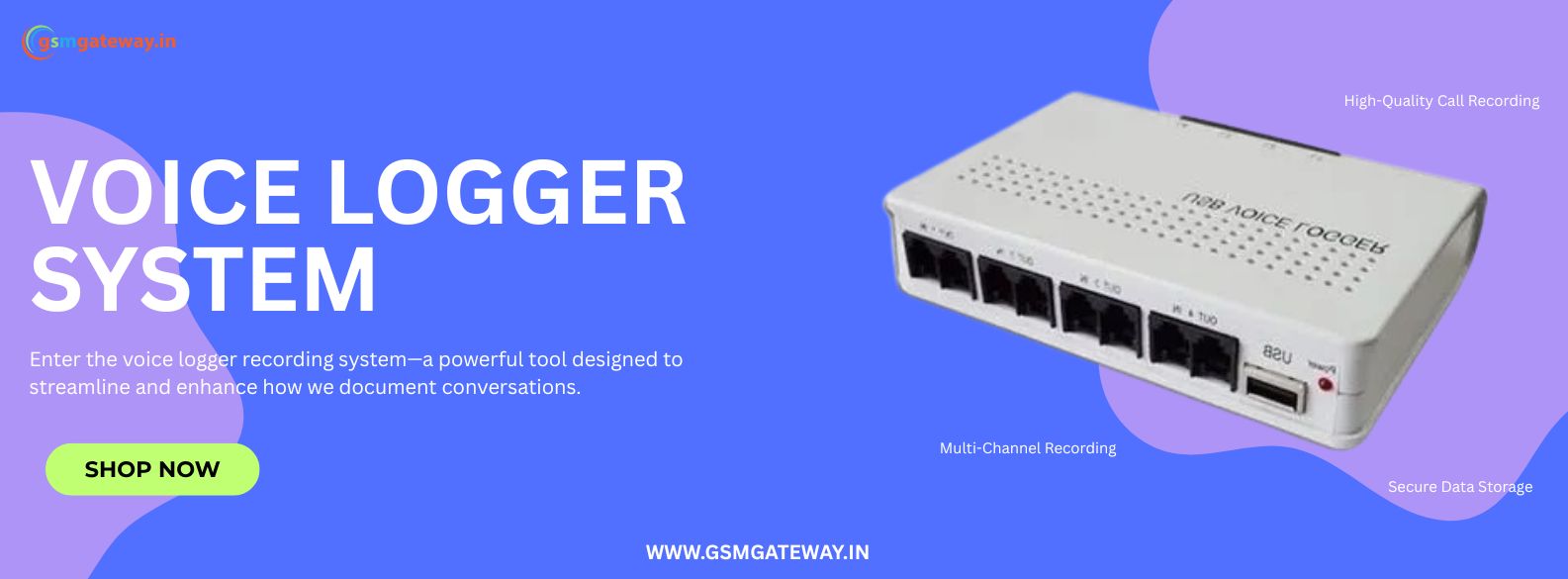
In today's fast-paced world, communication is key. Whether in customer service, legal
proceedings, or corporate meetings, capturing every word can make a significant
difference. Enter the voice logger recording system—a powerful tool designed to
streamline and enhance how we document conversations. With advancements in technology,
these systems have evolved into sophisticated devices that offer clarity and
reliability.
Think about it: what if you could effortlessly record important discussions without
worrying about missing vital details? A digital voice logger makes this possible. It not
only preserves critical information but also serves as a valuable resource for training
and compliance purposes.
As businesses increasingly rely on accurate documentation, understanding the ins and
outs of a voice logger system becomes essential for staying ahead of the curve. Let’s
dive deeper into how these devices work, their benefits, features to consider when
choosing one, and much more!
A voice logger captures audio from various sources, typically phone calls or radio
communications. It converts sound waves into digital data for storage and retrieval.
When a conversation occurs, the system activates automatically or manually. The audio is
recorded in real-time, ensuring that every detail is captured accurately. Advanced
models often utilize compression techniques to optimize storage without sacrificing
quality.
After recording, users can easily access files through a user-friendly interface. Some
systems allow searching by keywords or date ranges to streamline the process of finding
specific recordings. Additionally, many voice loggers offer playback features that
enhance clarity and facilitate easy review of conversations.
This functionality is crucial for training purposes or compliance audits in different
industries. With robust encryption options available, security remains a top priority as
sensitive information may be involved in these recordings.
A voice logger system records and stores voice conversations so you can revisit them anytime. It works quietly in the background, capturing calls without interrupting daily work. This is especially helpful when you want clarity—no guessing, no “he said, she said” moments. Everything is recorded just as it happened.
Voice logger systems come in a few different styles, depending on your setup. Hardware-based systems use dedicated devices and are often preferred for high-security environments. They’re reliable and steady, like solid wooden furniture that lasts for years.

These loggers are designed for modern communication systems. They integrate smoothly with digital networks, making them a natural fit for businesses that want everything connected and streamlined.
In 2026, voice logger systems are all about smart simplicity. Features like AI-powered search make finding specific calls quick and effortless. Instead of scrolling endlessly, you can search by date, keyword, or even emotion detected in the call.
Voice logger systems are widely used in call centers for quality monitoring and agent training. Managers can listen, learn, and guide teams without hovering. It creates a supportive environment where improvement feels natural, not forced.

Choosing the right voice logger system is all about balance—what fits your needs without
adding unnecessary complexity. Whether you’re setting up a call center, upgrading your
compliance tools, or simply want better control over daily conversations, the right
guidance makes all the difference.
At GSMGateway.in, we help businesses find voice logging solutions that feel simple,
secure, and future-ready. If you’d like to explore options or need expert advice, feel
free to reach out.